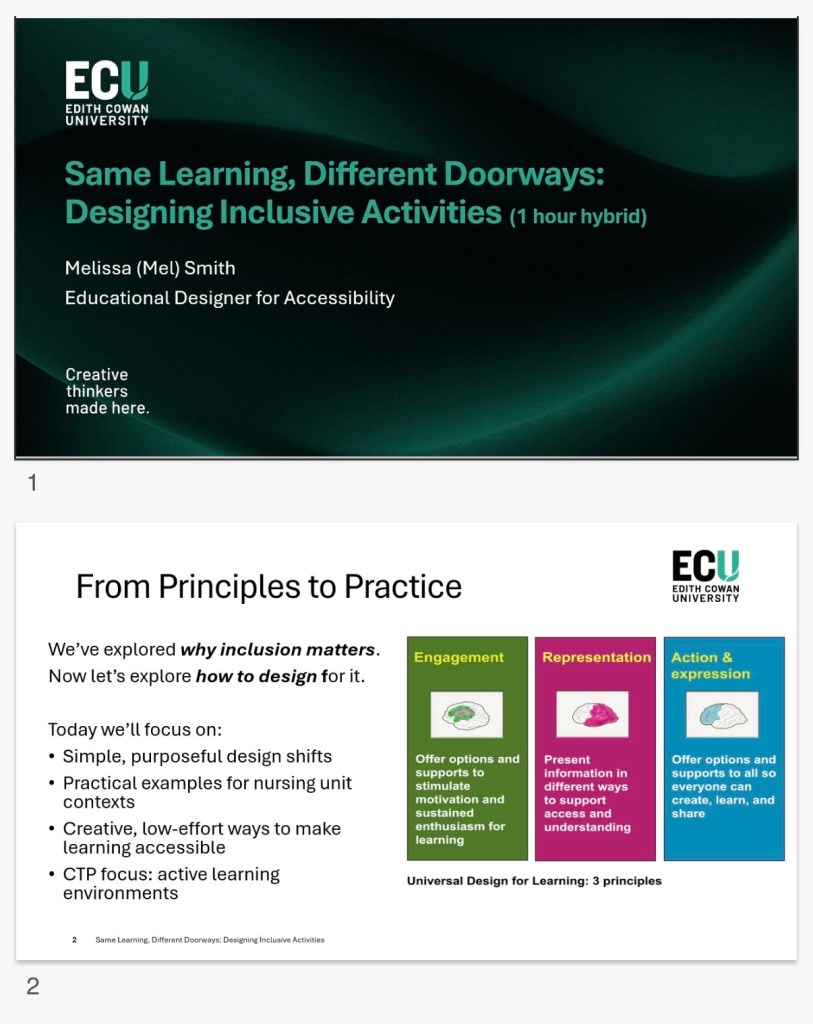
Ran my first UDL workshop today 

As part of my new role at Edith Cowan University, I facilitated a hands-on Universal Design for Learning (UDL) workshop that blended practical modelling with the theory behind inclusive design. It was a lively, engaging session – full of conversation, connection, and “aha” moments about how small design shifts can make learning work better for everyone (including us as educators!).

It’s exciting to see such genuine enthusiasm for UDL in the nursing schoo…the energy in the room today was a great reminder of why I love this work.

UniversalDesignforLearning #HigherEducation #InclusiveTeaching #ECU #UDL

Riding the Wave: Visualise Your Thesis Goes International

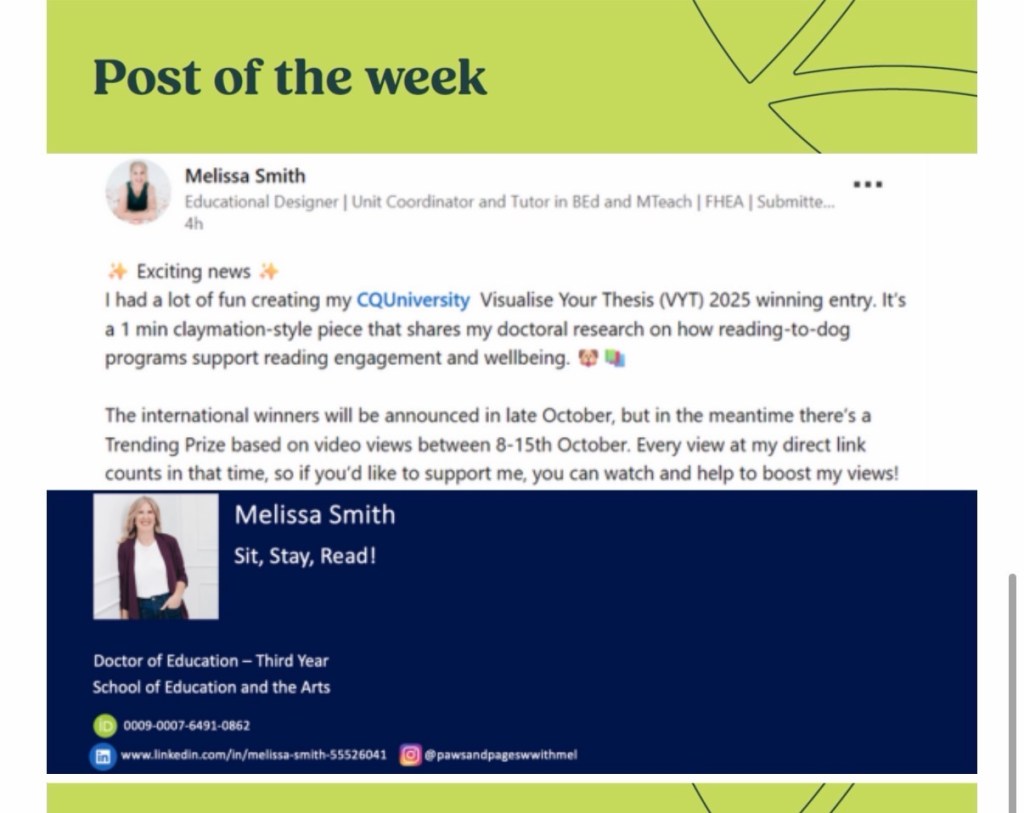
After winning the CQUniversity 2025 Visualise Your Thesis (VYT) competition, my claymation video on reading-to-dog programs as literacy interventions has now entered the international round. It’s been such a joy seeing my little clay dog take on a life of his own and help share my research story with a wider audience.

This week, I’ve been working my networks across Facebook and LinkedIn to spread the word and encourage people to watch the video – because in the international competition, the Trending Prize is decided by views! The response has been heartwarming. Friends, colleagues, and even strangers have shared, commented, and sent messages of support.

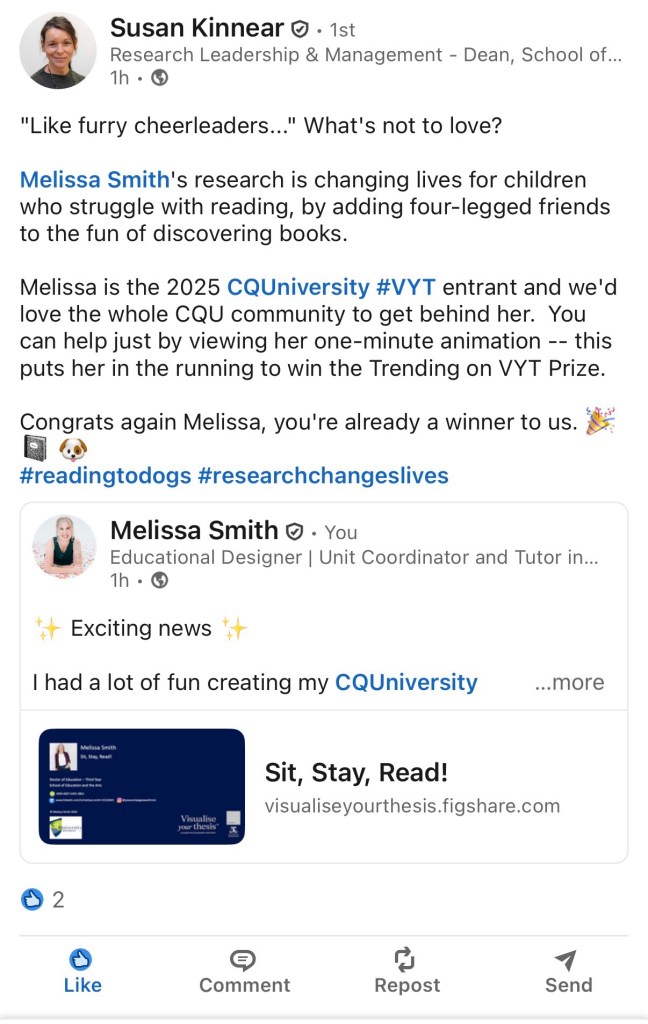
One of the highlights was seeing the Dean of Graduate Research at my uni resharing my post to help boost visibility. It’s a small gesture that means a lot…a reminder of how supportive academic communities can be when it comes to celebrating research communication and creativity.

I was also featured in the CQU Review newsletter as well.

You can still watch (and rewatch!) the video here:

🎥 https://doi.org/10.6084/m9.figshare.30134638.v1

I’m so grateful for everyone who’s taken the time to click, view, and share. Every view not only helps in the competition but also helps raise awareness of how dogs can support reading and wellbeing in schools.

What does a PhD in Australia actually look like? What’s the structure?

As I have been updating my progress recently I have been asked what different milestones actually mean? What is a doctoral degree? It’s not just “writing a really long book” although that’s definitely part of it. It also differs from country to country. So heres a summary in Mel-speak for you.

Here’s what the journey looks like at my university (CQU) in Australia. About I’m an EdD student, this is the same for PhD students in all faculties. The only minor difference is in Business and Law they verbally present their CoC as well as submit the written version.

👉 The early days – You start with a rough idea and spend the first months figuring out what on earth you’re actually researching. At this point it’s normal to have a lot of changes. You put together a proposal to prove the project is doable and sometimes there is compulsory coursework as well at this stage to build your skills. CQU has one self paced unit that directly leads into the CoC submission below

👉 Confirmation of Candidature – or CoC – is 6-12 months in. This is the first big hurdle. You hand over a chunky plan (mine was 16k words at the end), present it to a panel either verbally or just in writing, and basically convince them your project deserves to exist. Once you pass, you’re officially “confirmed” as a doctoral candidate. 🎉

👉 Ethics (straight after confirmation of candidature) – I have included this as a milestone because for me it was absolutely bonkers. Some people only need a uni ethics approval which can take a couple of months and then be done. I needed the uni approval first, then three different state education departments….then sector approval in each of those states (public, Catholic, independent) and then individual school and principal approval. Then each participant had to give their consent! I also hit lots of rejections here (because my research isn’t about phonics or science of reading) and had to pivot a few times.

👉 The messy middle – Data collection, fieldwork, experiments, interviews, analysing data using specific programs, writing, rewriting, doubting yourself, editing, applying feedback, more editing and then doing it all again. This is the part that can take years.

👉 The final writing stretch – Drafts, more drafts, and the dreaded “pre-submission review” where you prove the thesis is nearly ready to go to your supervisors. In my case this part was really overwhelming and I fell over a few times….but I got back up. Caffeine becomes a food group at this point.

👉 Professional proofreading – at my uni, we are allowed to use some of our funding to send our final draft to a professional proofreader approved by the university. They edit (no content review) and send it back to ensure grammar, punctuation, flow etc are up to standard.

👉 Submission day – You hand in approximately 65000 – 80000 words of your blood, sweat, and tears. Feels surreal.

👉 Examination – Experts read it (2-3 examiners usually) and send back their feedback, and you make corrections. This can take a few months. Examiners can be in Australia and international. Unlike some countries, there is no live exam or “defence” for me…just extensive written reports. Results at this stage can be:

  • Pass with no revisions (unusual but it happens!)
  • Pass with minor revisions (make changes within a few months and senior school of graduate research academic checks them – then you’re done!)
  • Pass with major revisions (significant changes that can take up to another 6-12 months before being reviewed again by your uni staff)
  • Re-examine with major revisions (significant changes that are expected to take 12 months and then need to go out to two external examiners again)
  • Fail (not common in Australia and especially not at my uni which has a lot of systems in place to avoid this)

My goal? Minor revisions!!

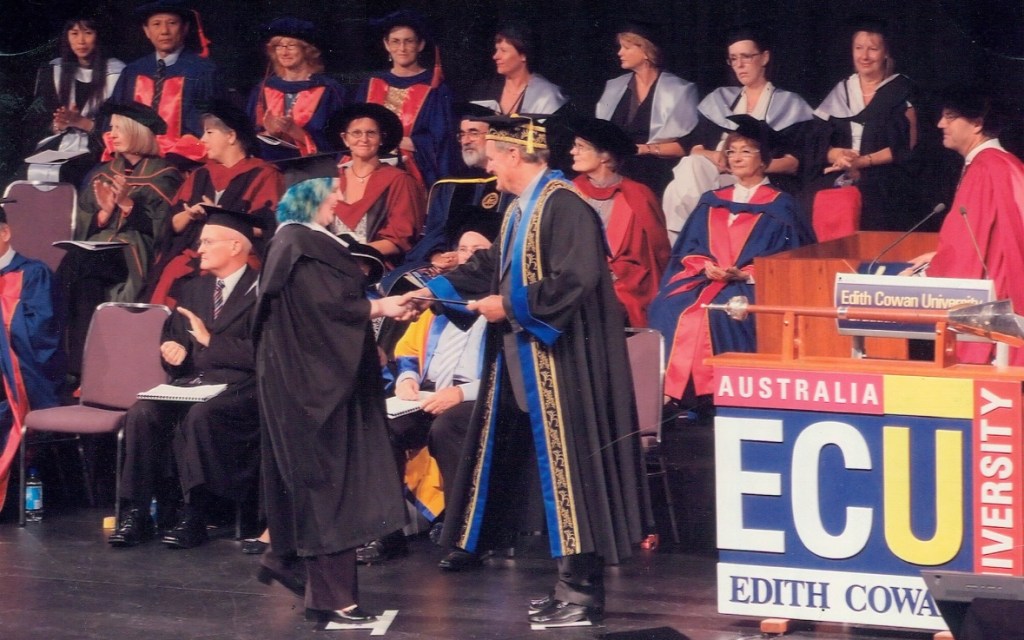
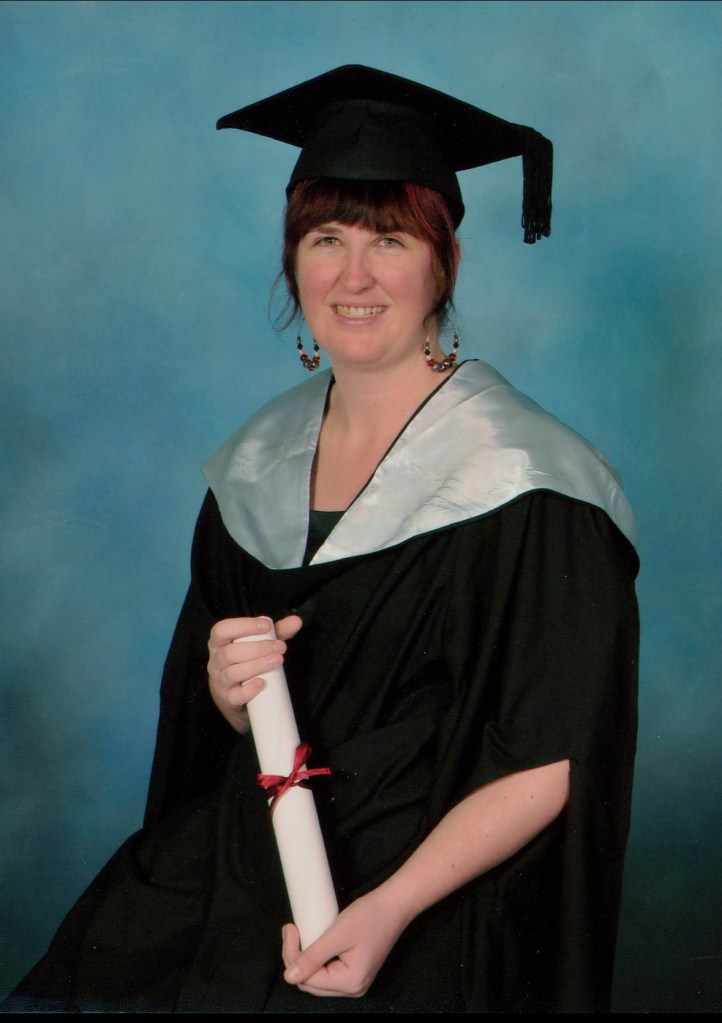
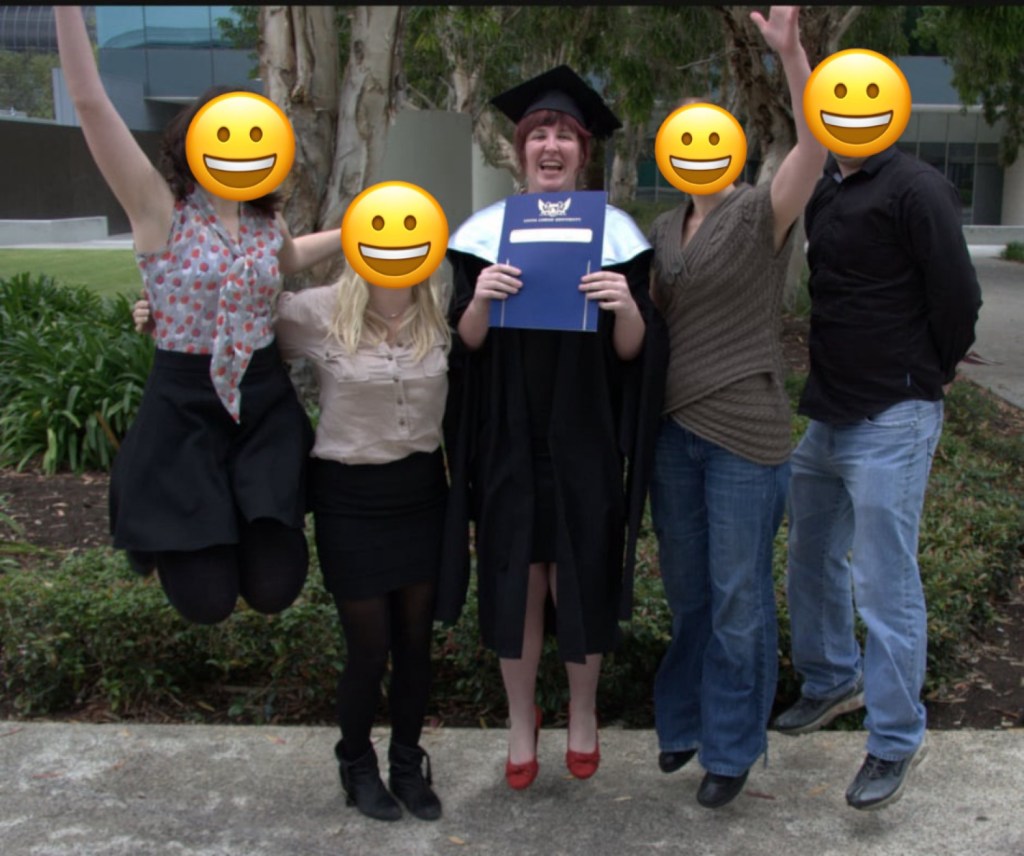
👉 Conferral and Graduation – Conferral comes first and means you have made all your changes and they have been approved by the uni. You then get a magic email addressed to “Doctor” and the title is officially yours! Graduation can come anytime in the year or two after that if you choose to attend. I’ll be travelling interstate for mine and you can bet I’ll be wearing my wanky hat for days 😂

FYI: my thesis length was approx 70000 words and 334 pages.

Stan Smith – the best grandad ever

Let’s talk about Stan Smith, my 98yo Grandad and my favourite person.

Aside from being an excellent grandparent (and stand in parent at various times in my turbulent childhood) he was also an accomplished glass blower and TAFE teacher.

He has always been a prolific reader and writer and my passion for storytelling and teaching definitely comes from him. Ten years ago I made him a blog and he continues to publish his short stories and poems on it today https://lnkd.in/ggScRNwC

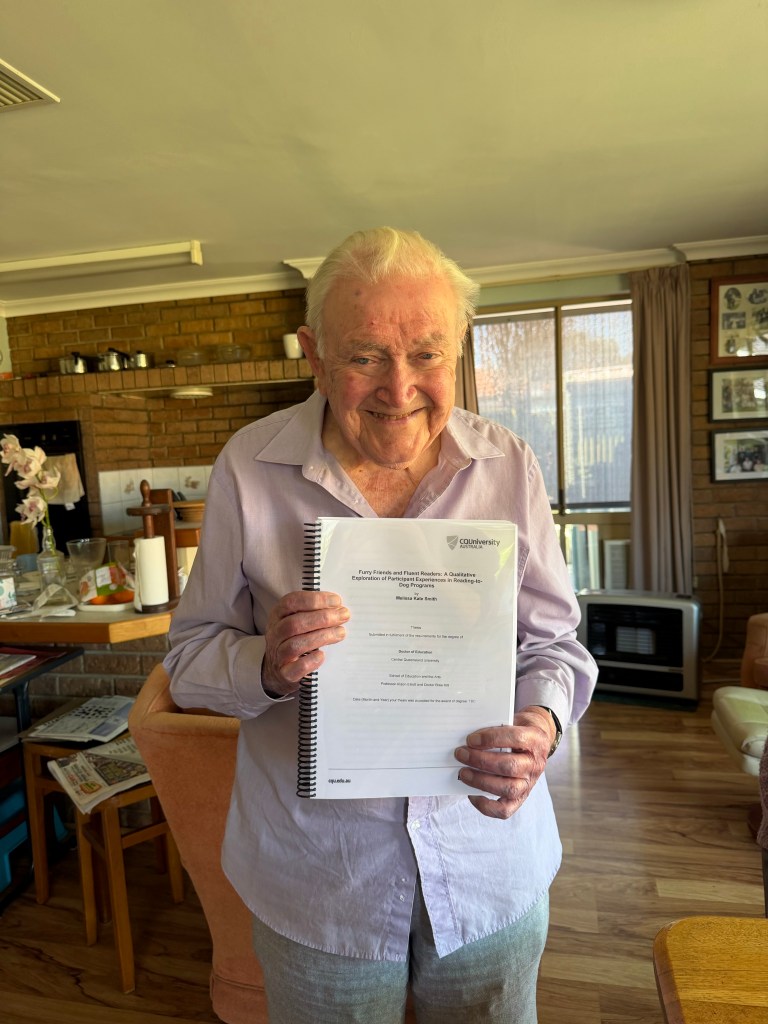
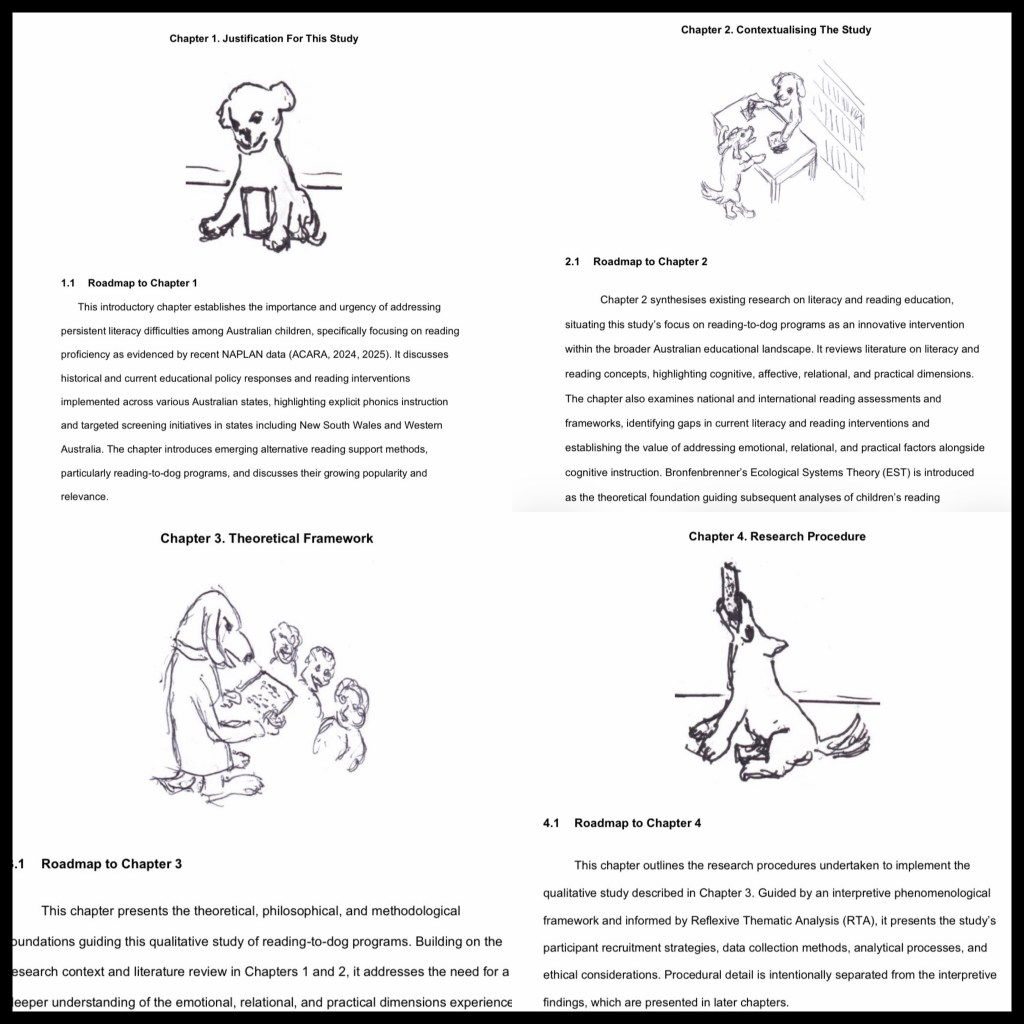
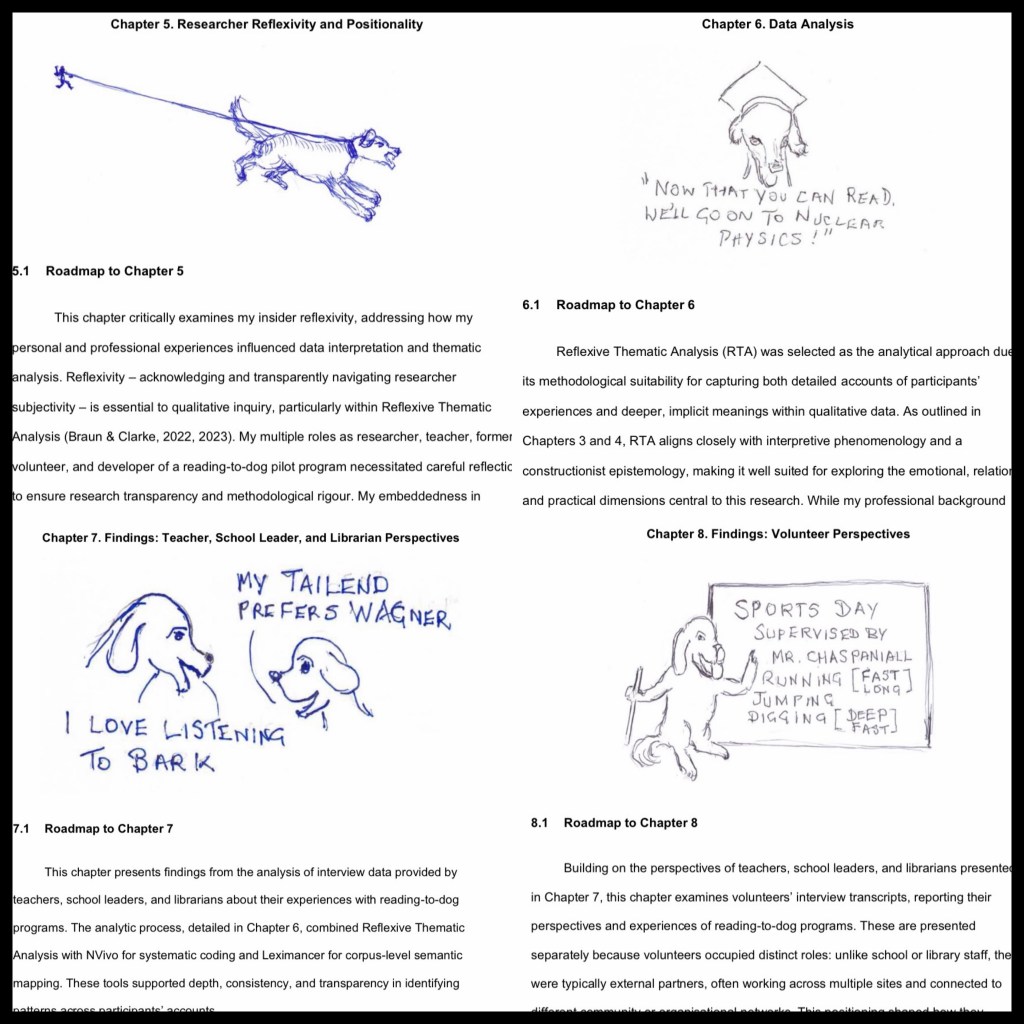
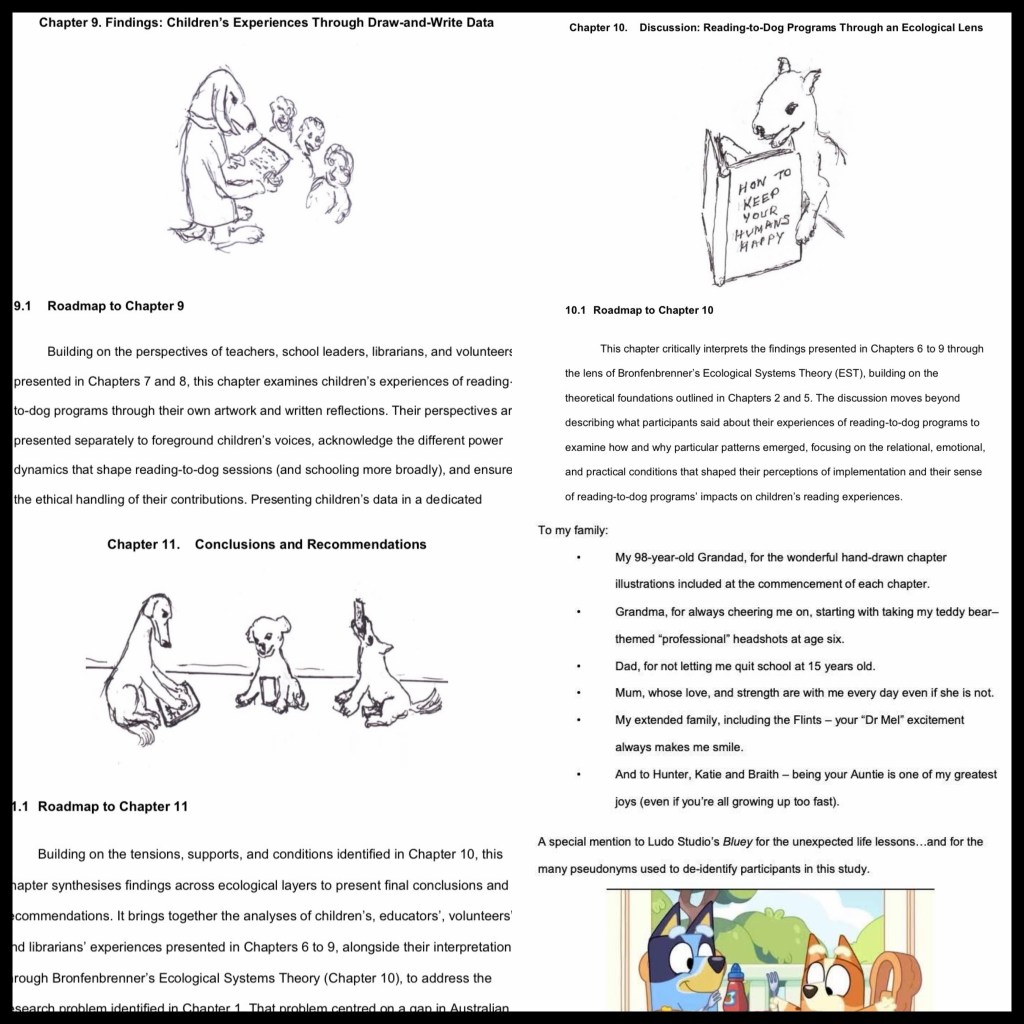
And as part of being an amazing Grandad, he hand drew me some dog themed cartoons for each of the chapter headings in my thesis. He was very chuffed today to receive a printed copy of my thesis submission and to go through and look at each of his drawings.

He also assures me he will read the whole 334 page thesis….

Thesis Submitters’ Toolkit: What I’m Using to Stay Productive While Waiting

Last week I hit a big milestone: I submitted my thesis for examination! After 3 years of writing, revising, and living with this project, it’s finally out of my hands. Now comes the strange in-between space – the waiting. As I’m in Australia, the next steps for me are two external examiners review it over a few months → I make any required changes → final submission → Conferral (Dr title time!) → graduation

The waiting is both a relief and a challenge. On one hand, I no longer need to wrangle chapters or chase down references. On the other, I can’t do anything to speed up the review process. So how do you stay grounded, motivated, and (dare I say it) even enjoy this period?

Here’s what’s in my personal “Thesis Submitters’ Toolkit” right now.

1. Writing… but differently

I’m giving myself space to write in ways that feel lighter and more creative. I’m drafting an article that grows out of my research, but the tone is different….more exploratory, less pressured. I’m also shaping an abstract for an upcoming conference. These smaller, bounded writing tasks keep me connected to my academic voice without dragging me back into thesis-mode.

2. Play as recovery

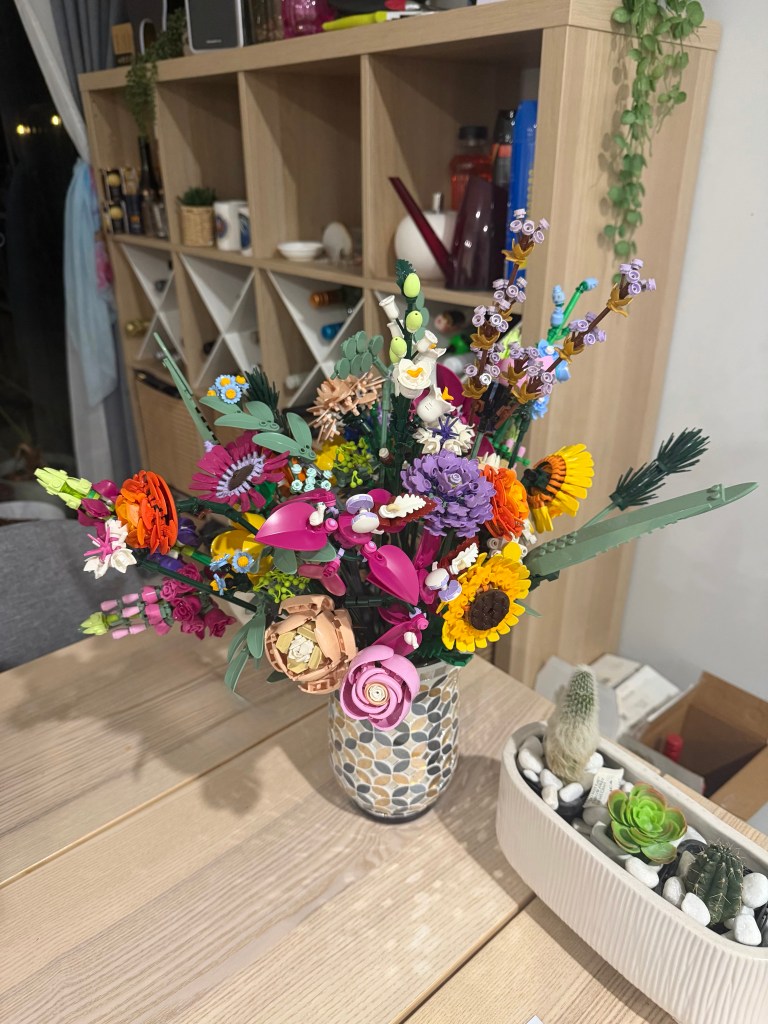
After months of serious, weighty writing, I’m deliberately making time for play. For me, that looks like building Lego botanical sets to add to my extensive collection. There’s something wonderfully grounding about following instructions, clicking pieces into place, and seeing progress in colour and shape rather than paragraphs. It’s productivity of another kind…creative, tactile, and completely non-academic.

3. Quiet space for myself

Submitting a thesis doesn’t just use brainpower; it takes an emotional toll too. I’m carving out time for walks, long cups of herbal tea, and catching up on books that have nothing to do with literacy, research methods, or thematic analysis. These pauses are as important as the projects. They remind me that rest isn’t wasted time, it’s a resource.

4. Looking ahead

Finally, I’m gently planning. I’m not diving into a huge new project, but I am sketching out what might come next eg papers, presentations, and the small seeds of new ideas. Having a loose plan helps channel the energy that used to go into the thesis, while still honouring the fact that right now is a time to wait.

Why share a toolkit?

If you’re in the post-submission limbo too, know that the waiting doesn’t have to feel like a void. Filling it with small, meaningful activities can make the weeks ahead feel less like “time lost” and more like part of the journey.

And if you’ve been through this stage, I’d love to know: what was in your toolkit while you waited?

Visualise Your Thesis 2025 CQU Winner – My Top Tips!

My Visualise Your Thesis (VYT) 2025 entry is now live in the international gallery!

The competition showcases graduate researchers around the world, each sharing their work in short, engaging videos. My entry was the CQUniversity winner in 2025 and uses claymation to share my doctoral research on reading-to-dog programs as reading interventions 🐶📚.

You can find my video here: https://youtu.be/LCKdJK4BLo4

My Top VYT Tips:

1. Start with your story, not your data

Your audience doesn’t need every detail of your thesis….they need the heart of it. Ask: What’s the one big idea I want people to remember?

2. Think visually, not text-heavy

Use images, animation, or symbols that capture your research message. Less text = more impact. If you can say it in 3 words and a strong visual, do that instead of a paragraph. If you compare my 2024 attempt to my 2025 one you’ll see I removed nearly all text for 2025.

3. Keep it simple and engaging

Imagine explaining your work to a curious 12-year-old or a friend outside academia. That clarity will help both judges and the public connect with your entry.

4. Focus on flow

Your 60-second video should feel like a smooth journey – beginning (the problem), middle (your approach), and end (why it matters). Storyboarding helps a lot.

5. Use sound strategically

Background music or narration can lift your message, but only if it complements the visuals. Test with and without sound to make sure it still works. I also had to record-record my voiceover quite a few times to ensure the correct sections were aligned for impact.

6. Prototype and get feedback

Show your draft to people who aren’t in your field. If they “get it” quickly, you’re on the right track. If not, refine.

7. Don’t forget accessibility

Use high-contrast visuals, clear fonts, and subtitles. This not only helps reach more people, but also shows thoughtfulness in presentation. Make sure to submit a transcript as well.

8. Have fun with it

Play, experiment, and let your personality come through. A memorable creative hook (like a claymation doggo 🦮) can make your research unforgettable.

Rejection in Academia (employment related)

I didn’t get the job.

And I want to say it out loud, because we don’t often share the “no.” And we especially don’t do it on that shiny FB self promotion site we all use to try and get work.
We share new titles, promotions, opportunities. We rarely share the rejection email that makes your heart sink after weeks of hope.

For most of my career, I’ve been good at getting jobs. I’ve built a reputation as a highly accomplished teacher and leader, and I know my field inside out. In fact, the last few roles I had in schools I was the preferred applicant from the get go. In fact, I built a small business helping teachers to get their dream jobs – that’s how good I was at it!

But stepping into academia as a new “almost a Doctor” feels like starting over. It means new rules, new benchmarks, and sometimes, new rejections.

Not getting these new, “starting out” academic jobs doesn’t mean failure.
It means:

  • I was brave enough to apply.
  • I learned (and practiced) how to shape my story and skills.
  • I gained feedback I can use next time.
  • I kept moving forward, even when the outcome wasn’t what I hoped for.

For anyone else navigating new career chapters: the “no” doesn’t erase everything you’ve achieved. It’s simply part of the path.

So today I’m choosing to name it, share it, and keep going.
Because the right “yes” will come.

Finishing Line in Sight: How I’m Preparing for My Doctoral Submission

There’s a strange mix of relief and panic that comes with the final months of a doctorate. Submission suddenly feels real and within reach, but so does the long list of edits, formatting tweaks, and final checks. It’s a season of tying loose ends, trusting the work I’ve put in, and finding small ways to keep momentum.

Here are some of the things keeping me on track as I head toward submission.

Mindset Rituals

I’ve learned that little daily rituals matter more than heroic bursts of productivity. For me, it starts with a morning beverage routine (not coffee…..but still caffeine. Done come for me!) where I set just one clear goal for the day. Sometimes that’s a big one (rewriting a section), and sometimes it’s tiny (checking two references). Naming the task helps me avoid spiralling into overwhelm and keeps progress tangible.

I also try to end each work session by noting what’s left undone – not as a failure, but as a marker of where to begin next time. It’s like leaving a trail of breadcrumbs for my future self.

Practical Tools

The checklist is my lifeline right now. Mine covers everything from double-checking APA referencing to ensuring figure captions match formatting requirements. I’ve also broken submission down into mini-milestones: proofreading one chapter at a time, running Turnitin checks, and cross-checking appendices.

I’ve found that sub-tasks make the mountain feel less intimidating. “Revise Chapter 7” is daunting. “Check headings and transitions in Chapter 7” is achievable. This one was key for me as I was getting so overwhelmed I was getting myself stuck and doing nothing.

Anchors for Well-Being

It’s easy to forget that this stage is just as draining as data collection or analysis. So I’ve given myself some anchors: walking the dogs, leaving weekends free where I can, and keeping evenings as screen-free as possible. These small pauses help reset my energy so I can return to the work with more clarity.

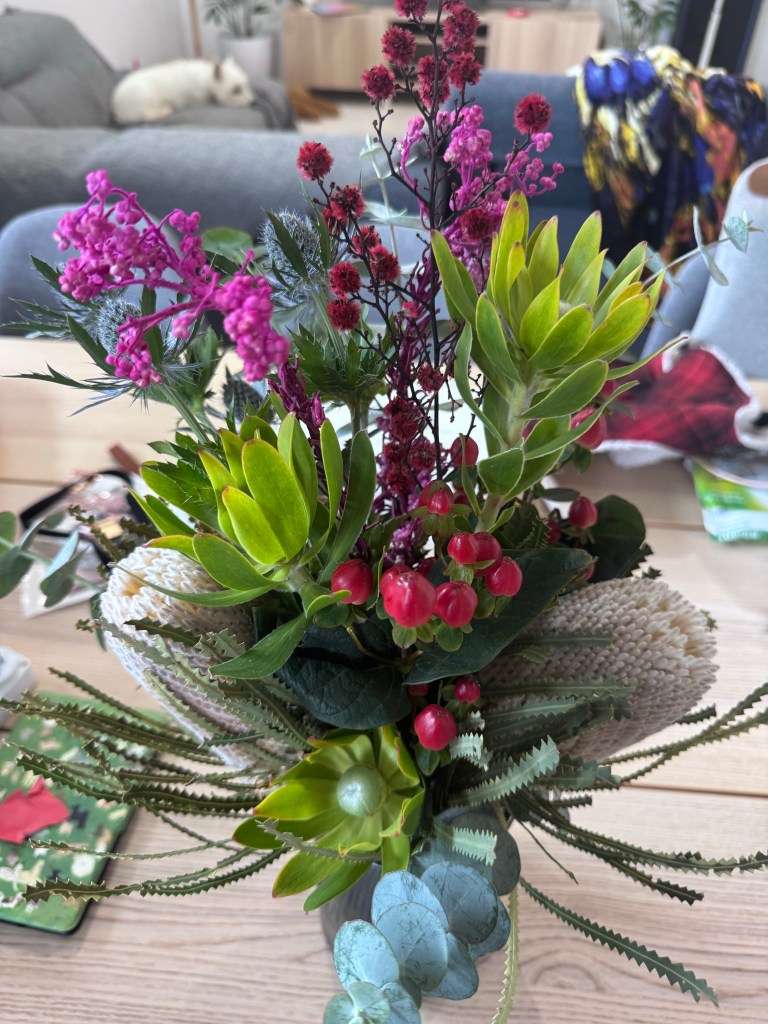
I also love flowers and have been making sure I have fresh and visible flowers at the moment while I am struggling a bit. It really improves how I feel when writing at home.

Accountability and Support

I’ve been leaning more than ever on my supervisory team, but also on peers who understand the strange push-pull of these final weeks. Sometimes it’s about feedback, but often it’s just about encouragement: a quick message that says, “You’re nearly there. Keep going.”

That reminder…that I’m not doing this alone…has been one of the most valuable supports of all.

Closing Thought

The finishing line is in sight, and while the list feels endless some days, I’m reminded that every ticked box is progress. If you’re in the same stage of your doctorate, take one sub-task at a time. Submission isn’t a single giant leap as much as it’s a series of steady steps.

And step by step, we’ll get there.

Struggling at the end stages of thesis writing

The final stretch of a thesis is supposed to feel like the end is in sight… right?

But right now, it doesn’t. I’m in the thick of it.
The last lot of feedback hit harder than I expected, and instead of motivating me, it’s left me frozen. I know it’s meant to strengthen my work…and it will…but it’s hard not to feel overwhelmed right now.

Balancing feedback, revisions, work, and life feels like spinning plates on a tightrope some days. It’s exhausting.

I’m sharing this not for sympathy but to remind others (and myself) that the final stages of a doctorate are tough. You’re not alone if you’re struggling. Sometimes “just keep going” looks like taking a break, admitting you’re stuck, or asking for help. Today, I asked for help and all the wonderful people I am lucky enough to be visiting in Rockhampton at CQUniversity rallied around.

If you’re also in the messy middle (or end) of a big project – academic or otherwise – I see you.

Let’s keep showing up, even if it’s just one word at a time.

World cafe learning activity

Today I helped to run an activity for Murdoch Uni teaching staff based on the “world cafe” method. It was fantastic to see it in action, consider the modifications already made for accessibility and then discuss other things that could change. So many ideas!

The World Café is a structured conversational process for fostering participatory learning and knowledge sharing within large groups, where participants rotate through small-group discussions at different tables to explore various topics, share ideas, and build collective understanding. It’s designed to be a relaxed and informal yet purposeful method that encourages open dialogue, collaborative problem-solving, and the generation of collective intelligence. Using the large size butcher paper (or 2 x A3 sheets taped together) per table is a must to allow for larger writing spaces.

The cherry on top of my world cafe sundae was definitely how engaged all 45 people were!