Thesis completion initiative at CQU

I’ve been accepted into the Thesis Completion Initiave (TCI) at CQUniversity!

TCI offers RHD candidates the chance to re-direct unused funding from their RHD budgets to support their thesis drafting. More importantly, it is a writing support program, aimed at providing candidates of all disciplines with peer support, motivational support and tips on writing productively. The typical structure of sessions is time spent discussing each participant’s progress towards their thesis goals; sharing successes and challenges; and supporting one another with potential solutions to common problems such as writer’s block, lack of motivation, managing time and other concerns. We then goal set and revisit those goals in the next session.

As an online/external student it can be a bit lonely….and overwhelming when writing things like findings and discussion chapters for the first time! So I’m excited to have some accountabil-a-buddies to keep me focused and positive.

Paw-sitive reading: How dogs can help struggling readers thrive

Written by Melissa Smith, Doctor of Education student (teacher for 18 years), Central Queensland University

I’ve always believed that the most meaningful educational programs often have a spark of creativity – the kind that lights up students’ eyes and makes learning feel less like work and more like an exciting discovery.

Continued via link….

https://www.nationaleducationsummit.com.au/nes-blog/paw-sitive-reading-how-dogs-can-help-struggling-readers-thrive

My grandad’s thesis contribution

My grandad is 97 years old and one of my favourite people. He keeps telling me my thesis publication is too far away for him! So, I asked if he would like to draw some doggy line drawings I could add to each chapter. He’s taken to the task with gusto and I love them so far.

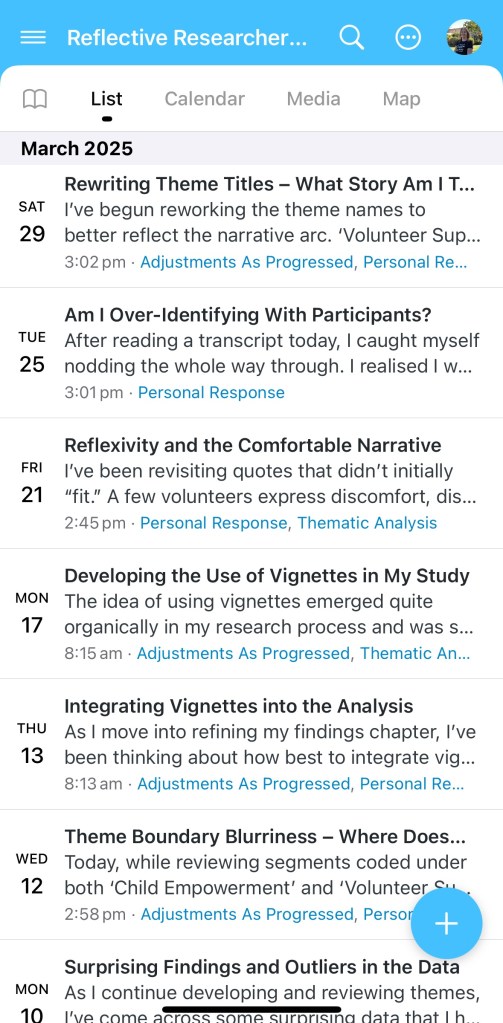
Promoting myself as a doctoral student

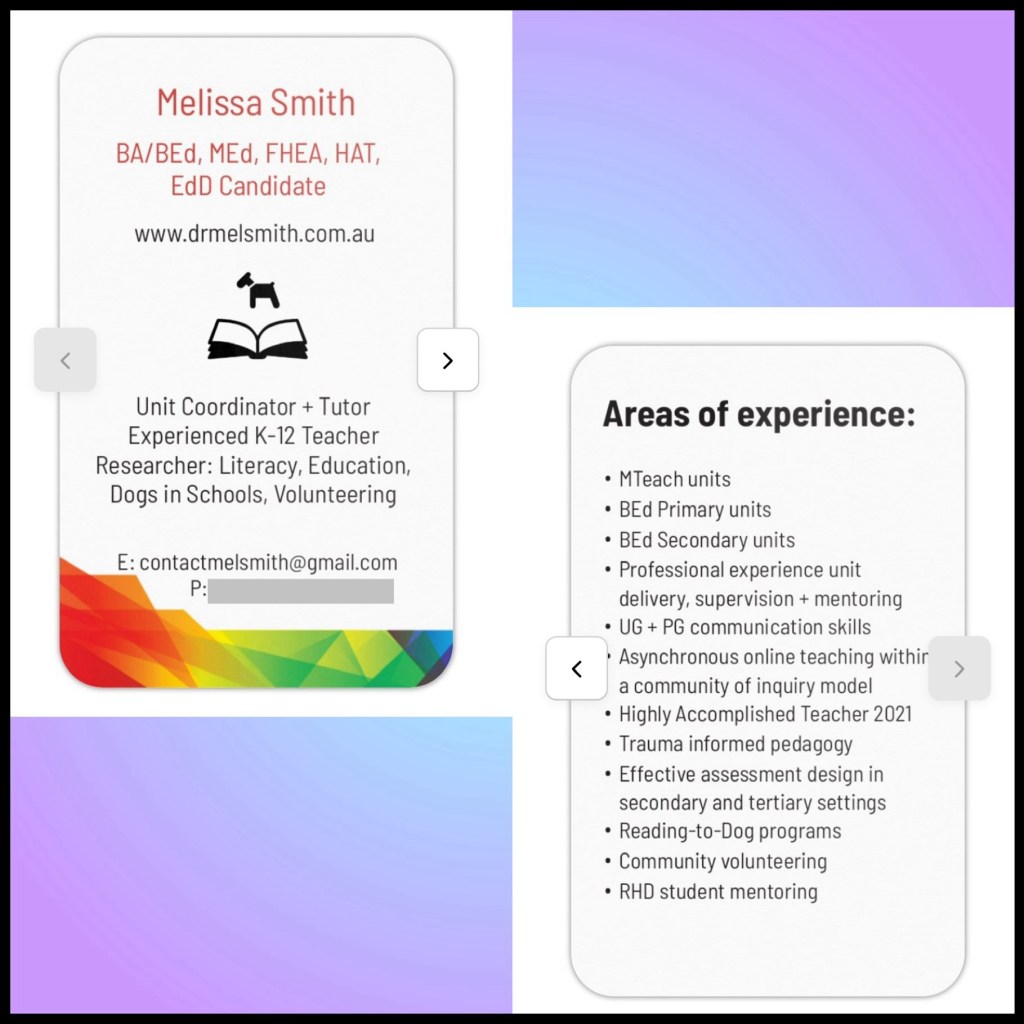
Another fantastic session during the CQUniversity RHD Online Intensive with Maria Gardiner today. The conversations inspired me to update my (very cheap Vistaprint) business cards to include a few recent achievements and ensure they are more “me”.

We also spoke about the importance of LinkedIn these days, google scholar (which I need to explore) and things like this website and blog. In fact, Maria used this as an example of what to do which was a bit exciting for me!

Personalised colouring tracker (a bit of fun)

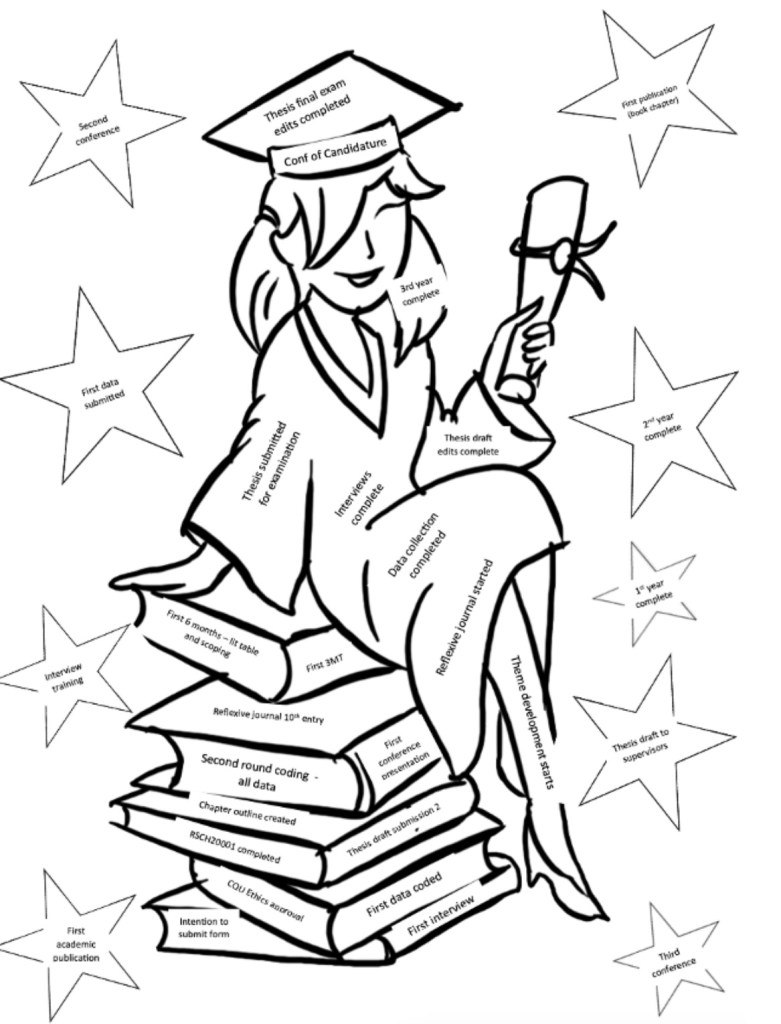
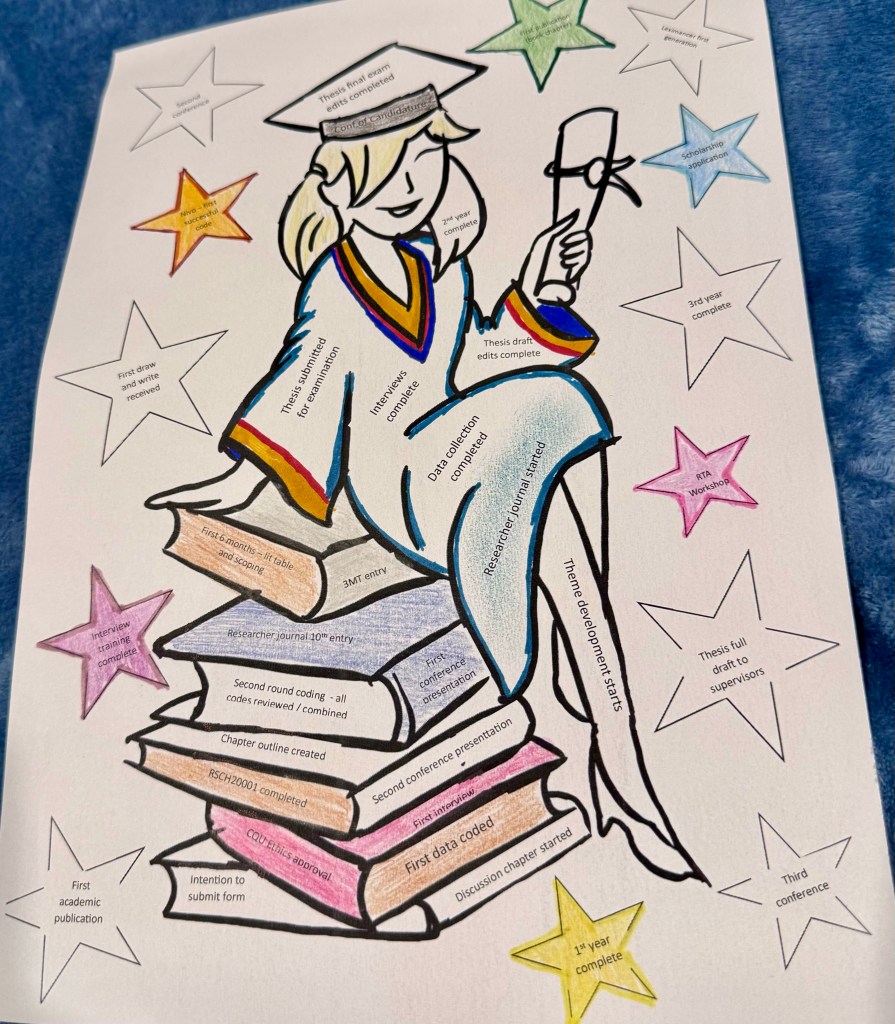
I wanted to share something I’ve found super helpful on my doctorate journey – I created my very own personalised “colour-as-you-go” progress tracker. It’s nothing fancy, just a fun way to keep track of all the big milestones, like submitting my thesis draft, presenting at conferences, or hitting those smaller steps, like coding data for the first time!

I designed it in Word as I’m not creative enough to free draw. Canva would also be a great tool. What I love about it is the satisfaction of colouring in each section as I tick things off. It’s a little (low cost) thing, but it makes the whole process feel a bit more manageable. Plus, it’s nice to have a visual reminder of how far I’ve come, especially on the tough days.

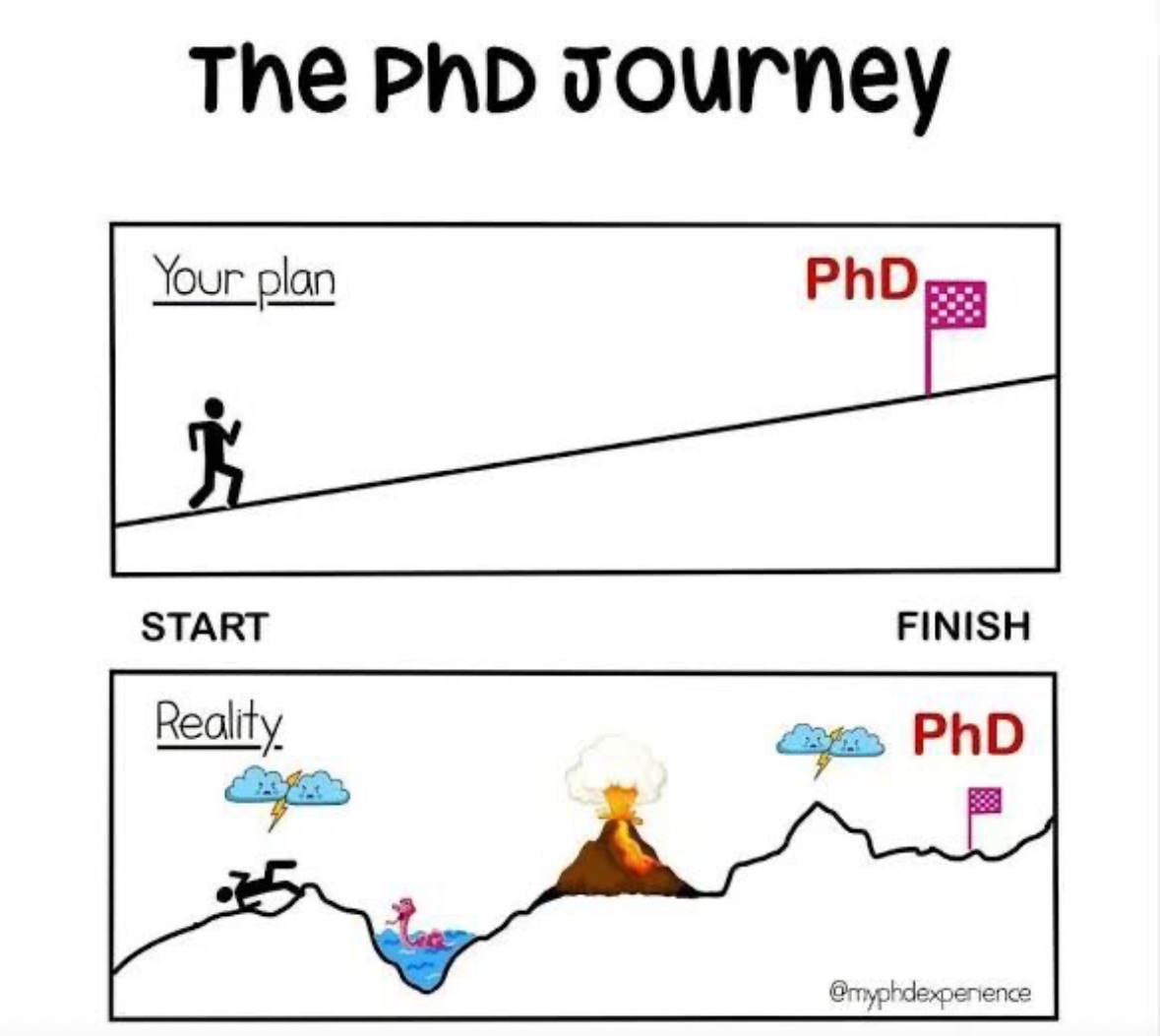
Starting out!
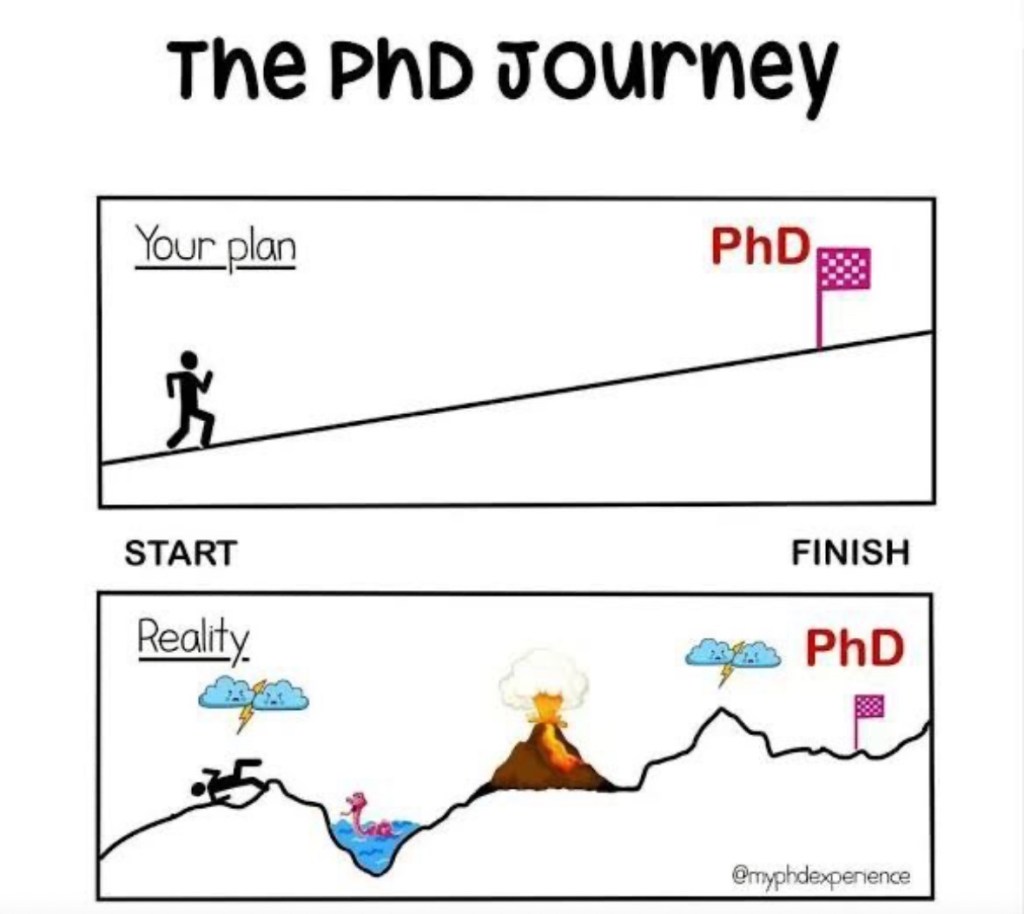
End of second year

The writing bug

I have always been a journal writer although I usually use a blog/social media posts rather than a “standard” journal approach. Combined with this, my mentoring role at CQU has made me realise I’ve hit some HUGE speed bumps (or walls…walls with sharks in them trying to eat me might be more accurate) on my doctorate journey so far. Not everyone hits these but some people do and just sharing my story has helped reassure others there is a way through it.

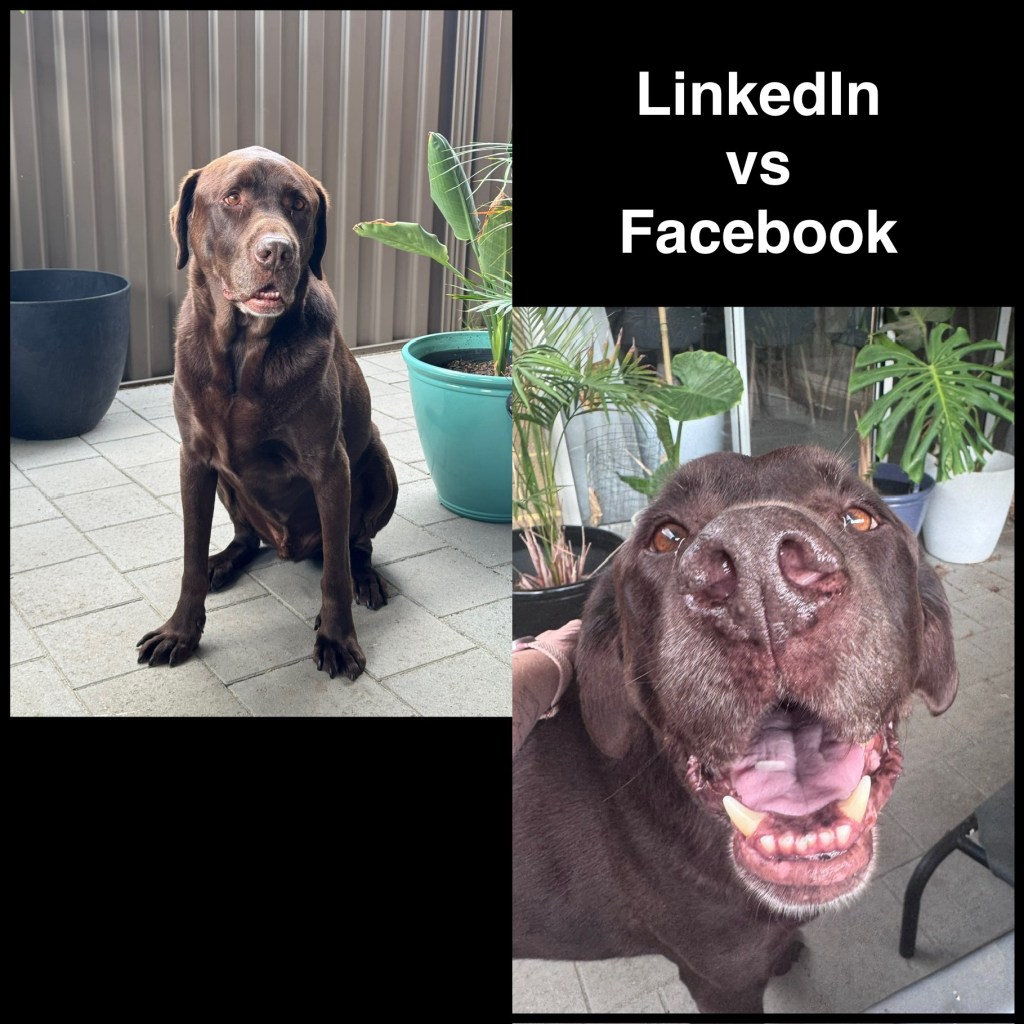
I’ve decided to collect all my blog posts. LinkedIn, Facebook, X etc posts over the last 2.5 years (and the coming year of thesis writing hell haha) and edit them into my own little book “Letters to my PhD”.

…because I don’t already have enough things to do 😂

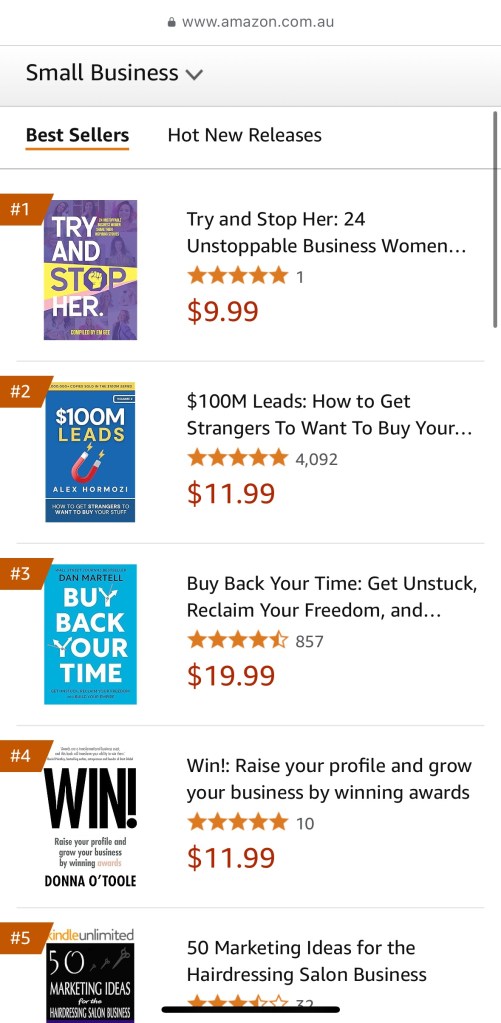
I’m officially a published book author!

In February of this year, a coach and business leader I know put forward the idea for a collaborative book. It was going to be all about the stories behind successful women in business.

I thought….I don’t fit that shape.

I thought….sure I’ve run small businesses but only little ones to allow me to redirect my career. That’s not success  

I thought…who would want to read my story anyway? 

Apparently quite a few people! 

Kindle link here

Purchase a signed copy here

The books advertising blurb 

We all have THOSE books…

The ones that no matter how many times we read, we discover something new.

The ones you always recommend to friends when they’re looking for a new book.

The ones that have dog earred pages throughout, signalling hidden gems you want to forever remember.

The 24 authors from ‘Try And Stop Her’ have those books too, and we’re excited to drop a new book into your collection that will be inspiration for many years to come!!


Thematic Analysis Masterclass (3 days)

I was lucky enough to be offered a funded spot at a Thematic Analysis Masterclass with Dr Claire Moran in Brisbane over the last few days. She is building a website currently but in the meantime, this is Claire’s info: https://about.uq.edu.au/experts/10684

I flew out of Perth at 8am on the Sunday morning and arrived in Brisbane a day early to ensure I could make it on time for Day 1. Props to CQUs school of graduate research for always being considerate about flight times when I get to visit.

CQU Brisbane is in the city centre and the hotel was walking distance – so a great set up.

Being a teacher and an academic, I’ve been to many PDs and training courses over my career. I’ve had amazing experiences and I’ve had….well, awful ones. Claire was hands down one of the best presenters I have engaged with in 22 years in education. We had 20ish students squished into a small room and she still made it feel personalised and targeted.

So, what made it so good?

  • Claire was friendly and approachable, used names (name tents) and told jokes etc. Not awkward and very genuine
  • Claire told us a bit about her but not too much. It was a great balance of personal and professional
  • Hands on activities progressed from macro to micro. We played with abstract ideas (the buttons) and linked them to concepts being discussed. Then we coded stuff ourselves but we did it with models to support
  • Pre reading was DIRECTLY relevant. Nobody who did it would have thought it was a waste. She also justified it in the email when sent to us (why these?!).
  • She used her own data and studies which meant she knew it inside and out. It also felt more authentic as it was real data, not created for example purposes
  • The third day wasn’t a part of Clare’s structure but was great. I think this should be built in with guidance activities for self paced the next day

Day one made it clear from the get go this would be practical and relevant to everyone. After a get to know you share, we reviewed what TA was then did a great activity with buttons. I won’t spoil it but as a high school teacher I immensely appreciated just how many levels it worked on! Plus, pretty buttons.

After lunch, we launched into learning about, then applying, each step of TA to a provided data set. Some parts I did find very hard….but so did others which was actually very reassuring to see.  Perhaps modelling how to get started with themes together was needed as everyone lost time here doing the wrong things. There was a great balance of models and “have a go” here and I say that as an anxious person who needs explicit direction.

At the end of the first day, I went out to dinner with my principal supervisor who I’ve never met in real life! As she had two students attending the workshop days, the uni arranged for her to visit us along with two other supervisors so we had dinner as a group. 

One of the things I was most excited about for Day Two was discussing image analysis in TA. This is something I will (hopefully) be doing as part of my data collection and I am aiming to integrate it alongside my interview transcripts as well.  We only got a very brief look at this but even that helped answer some of the questions I had. I was also able to briefly chat to Claire in a break and showed her one of my sample drawings (can’t be used for my data set). In just 2 mins she got me thinking about a whole bunch of coding aspects I hadn’t considered.

Sample “draw and write” artwork compilation – not part of data set

Day two ended with microwave pasta in my hotel room while trying to pack, finalise MTeach marking and do all that other admin stuff that comes with a sessional unit coordinator role. 

The third day then provided an opportunity for RHD students from the School of Education and Arts to sit together and apply the learning to our own data set. Some of us had data, some (like me) had sample or pilot data and a few were not yet at that stage. We also had a fantastic debrief and sharing of challenges. The opportunity to spend that third day considering and discussing what we learnt was much more valuable than I initially anticipated. Instead of leaping straight back into “the grind” we all had that extra day to decompress, chat, share resources and identify what our next steps would be before travelling home.

What might I change? Feedback I gave?

I would prefer a 9am start and earlier finish but that’s me.

Lots of things we were shown had examples but no resources on the reflective journals. Still no detail on how or when or what to do? Maybe some templates or models? With positives and negatives labeled for people to create their own….kinda how thinkwell has their repository

Themes was still a bit up in the air. More time on that? Another go at coding would have been great as well….maybe a 3rd day is needed! Clare mentioned she does 2 as most people can get 2 days off but 3 or more is a lot harder. Interesting data point!

Image and multimodal was rushed and only got about 25 mins right at the end. I would have preferred less time on some of the other parts but I also acknowledge nobody else was using images in the group. Assumptions activity was good but could have been shortened significantly as everyone was very tired and not really wanting to talk to “new” people

Slides beforehand (tricky I know, want to make sure people show up)

And finally…I never realised how much I appreciate candy / mentos on the table until it wasn’t there.

Three minute thesis – CQuniversity winner!

I won my university’s 2024 three minute thesis competition! This means I move forward as the CQUniversity representative in the international (Asia pacific region) 3MT competition. In October 2024, representatives from universities across Australia, New Zealand, Japan, Hong Kong, Malaysia, and Singapore will compete for the title of the 2024 Virtual Asia-Pacific 3MT Winner.

I was also runner up for the CQU people’s choice award.

The 3MT competition allows Higher Degree by Research candidates to hone their communication skills, receive international peer review, and gain skills surrounding the presentation of their research to a wider audience.

Three Minute Thesis (3MT) and Visualise Your Thesis (VYT) competitions as a first timer

Imagine this: you’ve spent years crafting an 80,000-word PhD thesis. Now, you’re expected to condense that research into 3 minutes for the 3MT (Three Minute Thesis) competition. If you’re aiming for the VYT (Visualise Your Thesis) competition, you’ve got just 1 minute!

Turning an academic masterpiece – whether it’s an 80,000-word thesis or a 15,000-word confirmation of candidature – into a 1-3 minute performance isn’t just about simplifying; it’s about presenting your ideas in a tight, captivating art form.

For context on these tips, I’m nearing the end of my second year and have completed my confirmation of candidature and ethics approval. I’ve submitted a 15,000-word literature review and methodology framework, made changes based on external reviewers, and commenced a pilot study.

Tips from a first-timer for 3MT and VYT:

Scripts and video planning: Creativity is key. Shorter is necessary. Review and edit obsessively. Read it aloud! I edited my VYT captions around 20 times, and my 3MT script even more. Align your captions with visuals and get a range of feedback.

The Importance of Visuals: VYT allows flexibility (video, images, slides). One of the very early pieces of VYT feedback I got was on a slide where I say “now imagine that dog wagging its tail as the child reads aloud….” and to use a video of a kid reading to a dog while the tail wags. Cue 4hrs of attempting to film that! For 3MT, I will use a single evocative image—think minimalist.

Title Changes: Use a snappy, descriptive title that grabs attention. Avoid your thesis title!

The Hook: Avoid the overused “imagine that…” start in 3MT. Go for a fresh, engaging opening that situates the viewer in your research. Build connection and emotion. 

Jargon Be Gone: Simplify complex terms like pedagogy, emergent, fluency, phonemes for a general audience without being patronising.

The Art of Storytelling: Use “I think…,” metaphors, similes, and rhetorical questions. Follow a story structure – start with a hook, provide details, and circle back to your opening.

Significance: Explain why your research matters. Don’t overlook this, especially in the early stages. I missed it in my first drafts, as I’m in my second year with limited “output” yet.

Here is my V1 versus V6 script after sitting through lots of amazing training opportunities provided by my uni, including two extremely helpful sessions run by Simon Clews.

In short, distilling a thesis into an ‘elevator pitch’ is like condensing a complex recipe into a single bite-sized appetiser. It’s a challenge, but with the right approach, you can effectively capture the essence.